
Legal Advice Basics: What It Is, Why It Matters, and How It Helps You
Legal advice basics means understanding how laws affect your daily life and knowing when you need a lawyer. It teaches you to tell the difference between general legal information and actual advice from an attorney. Most people wait until something goes wrong to get help, but learning the basics helps you spot problems early, ask the right questions, and make better decisions about contracts, deadlines, and disputes. You don’t need to become a legal expert, but you should know enough to protect yourself and recognize when professional guidance matters.
What is Legal Advice Basics?
Most people do not look for legal help until something has already gone wrong. A notice arrives. A deadline passes. A signature feels rushed. By then, choices are often limited. This is where understanding the basics makes a real difference.
Legal systems affect daily life more than many realize. Housing, work, family, finances, online activity, and even routine agreements carry legal consequences. You do not need to be a lawyer to protect yourself, but you do need clarity. That clarity begins with Legal Advice Basics, which focuses on knowing how the system works before pressure sets in.
This guide is built for real people facing real situations. It explains how to spot reliable legal information, when self-help is reasonable, and when professional support matters. It covers everyday areas of law, common mistakes, documentation, pricing, free legal help, and independent legal advice. Each section connects to the next because legal issues rarely exist in isolation.
This site provides legal information only. It does not replace personal legal advice. Instead, it helps you ask better questions, recognize risks earlier, and make informed decisions with confidence. When you understand the rules of the system, you are far less likely to be caught off guard by it.




Legal Advice vs Legal Information
Many people treat legal advice and legal information as the same thing. They are not. Confusing the two leads to bad decisions.
Legal information
Legal information explains the law in general terms. It describes rules, definitions, and procedures. It helps people understand how the legal system works. Reading about eviction laws, court deadlines, or statutes is legal information.
Trusted public sources publish this material. Courts and agencies do it to educate the public. Law schools do it to explain the law clearly. The Legal Information Institute is a widely used example. Legal information stops at explanation. It does not tell you what to do.
Legal advice
Legal advice applies the law to specific facts. It answers personal questions and recommends action. When a lawyer reviews your documents and explains your options, that is advice. When a lawyer says which step fits your situation, that is advice.
In reviewing legal case outcomes, it becomes clear that cases can turn on one overlooked detail. The law was clear, but facts changed everything. Another critical difference is protection. Legal advice creates an attorney–client relationship. That relationship triggers confidentiality.
Attorney–client privilege protects what you share with your lawyer. Courts have upheld this protection for generations. Legal information offers no privacy. Anything you share online stays unprotected.
The distinction also matters for who may speak. Only licensed attorneys may give legal advice. Non-lawyers may explain the law, not direct decisions. Understanding this line is part of Legal Advice Basics. It helps you know when education is enough. It also shows when personal guidance becomes necessary.
Quick Comparison:
Legal Information | Legal Advice |
|---|---|
Explains how the law works in general. | Applies the law to your specific situation |
Helps with learning rules and procedures. | Helps decide what action to take. |
Available from public or educational sources. | Given only by licensed lawyers. |
No confidentiality or legal protection. | Protected by the attorney–client privilege. |
Useful for awareness and preparation. | Required when decisions or risks matter. |
Disclaimer: This article is for general informational purposes only and does not constitute legal advice. No attorney–client relationship is created.
Basic Types of Legal Advice
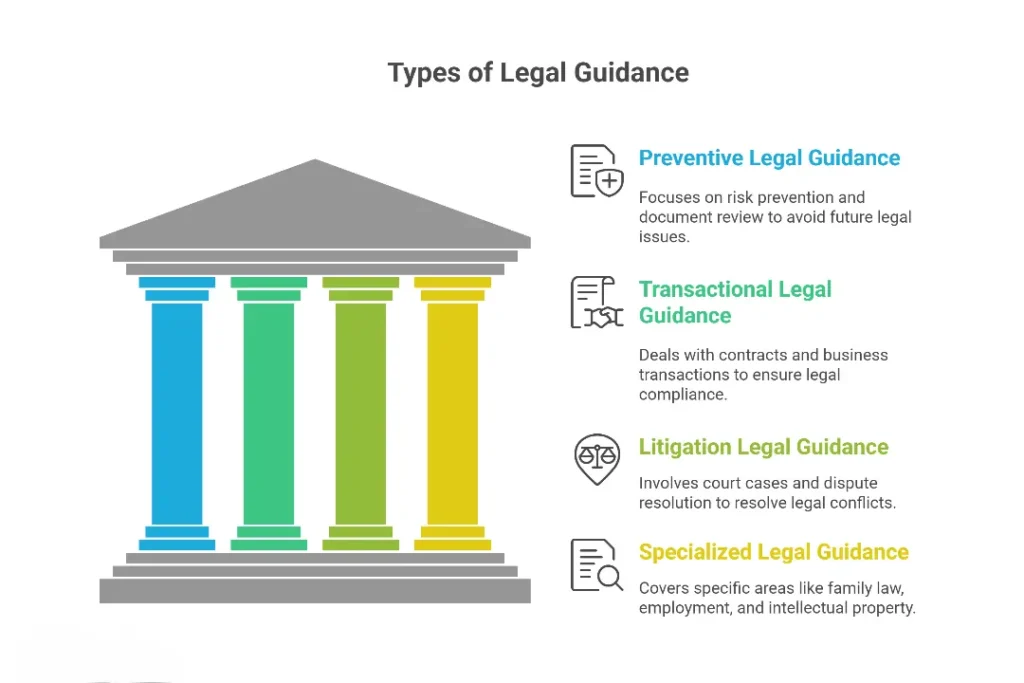
People usually seek legal guidance for one of four reasons.
Reading about legal advice basics, it is necessary to understand the difference, and it also helps you look for the right kind of help at the right time.

1: Preventive Legal Advice Basics
Preventive legal guidance helps reduce risk before problems start. This type of guidance often involves reviewing documents, spotting weak language, or checking whether actions follow the law. It is commonly used for contracts, workplace rules, estate planning, and regulatory compliance.
For example, reviewing an employment policy against the Fair Labor Standards Act can help avoid wage disputes. Federal agencies like the U.S. Department of Labor publish clear standards that many employers overlook. Preventive work focuses on preparation. It aims to stop disputes, fines, and lawsuits before they form.
2: Transactional Legal Guidance
Transactional legal guidance applies to major agreements and financial decisions. People often seek it before signing contracts, buying property, forming a business, or completing a merger. The goal is to confirm that terms are clear, lawful, and enforceable.
In the United States, many business agreements follow rules under the Uniform Commercial Code. Real estate transactions also require title checks, zoning review, and proper transfer documents. It prevents future conflict by ensuring clear and well-structured agreements early.
3: Litigation Legal Advice
Litigation legal guidance applies when a dispute becomes formal. This includes lawsuits, administrative claims, and court proceedings. It often begins with a review of facts and evidence, followed by filings, motions, and negotiation.
Many employment disputes involve agencies like the Equal Employment Opportunity Commission before reaching court. Family and civil cases depend heavily on state procedures and deadlines. Most cases do not reach trial. Legal guidance in this area often focuses on settlement strategy, procedure, and evidence handling.
4: Specialized Legal Guidance
Some issues require guidance from a specific legal field. Family law covers divorce, custody, and support. Employment law addresses wages, discrimination, and termination. Immigration law involves visas, permanent residence, and citizenship. Intellectual property law protects trademarks, copyrights, and inventions.
Each area follows its own rules, agencies, and timelines. General knowledge is rarely enough in these situations. People usually seek specialized guidance when the law is narrow or technical.
When to Seek Legal Advice? Key Situations You Shouldn’t Ignore
You should seek legal advice when a decision can affect your rights, money, property, or future. Early guidance often preserves options that disappear with delay. Legal issues usually appear as documents to sign, deadlines to meet, or pressure to respond quickly. Those moments often signal that legal guidance is needed.
Based on research into legal procedures and case timelines, delays cause more harm than bad facts. Strong positions weaken when timing is ignored. According to the 2024 Clio Legal Trends Report, nearly 60 percent of people seek legal help only after missing a deadline. You should speak with a lawyer before signing contracts, leases, settlements, or business agreements you do not fully understand. Legal advice also matters when you receive court papers, agency notices, or formal demands.
Family and property matters often carry long-term consequences, which makes early legal review essential for wills, estates, real estate transactions, and business formation. Employment disputes also require fast action, as agencies like the Equal Employment Opportunity Commission enforce strict filing deadlines. Because courts regularly dismiss late claims, acting early is a core principle of Legal Advice Basics, a point long emphasized by the American Bar Association.

Who Is Authorized to Give Legal Advice?
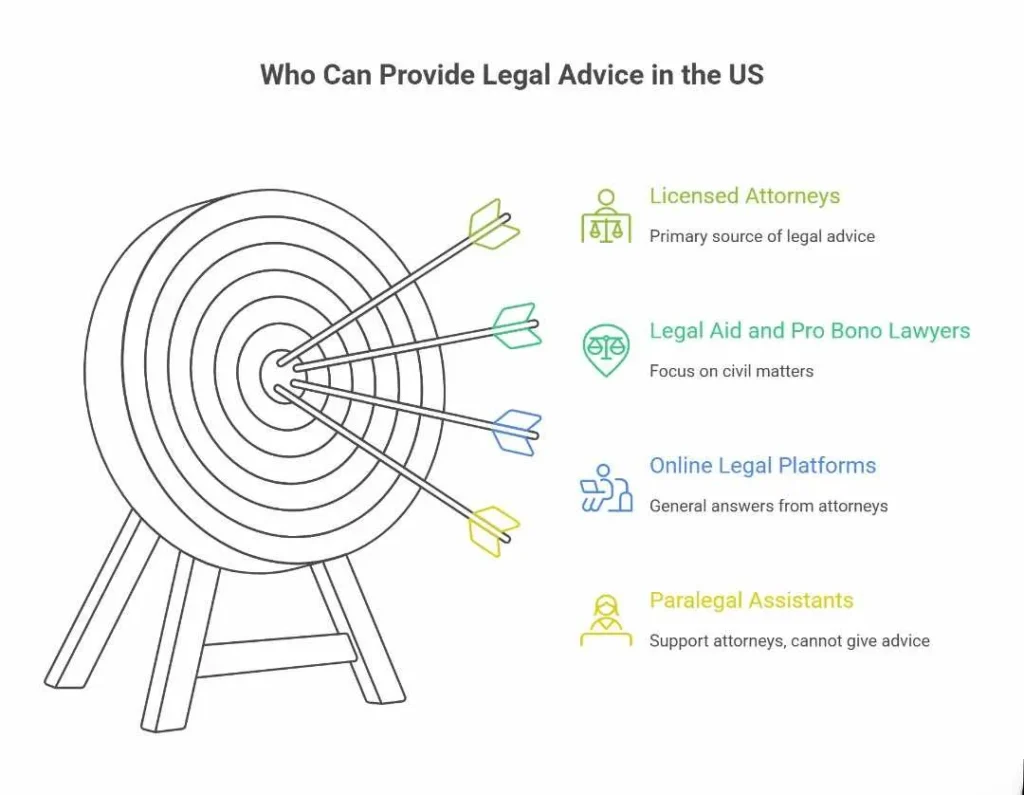
As we discuss Legal Advice Basics, it is essential to note that in the United States, only certain professionals are authorized to provide legal advice. Knowing who qualifies protects your rights and helps you avoid costly mistakes.
1: Licensed attorneys
Licensed attorneys are the primary source of legal advice. They are trained, licensed by the state, and permitted to apply the law to specific facts. Only an attorney can give personalized guidance or represent you in court.
In situations I’ve seen repeatedly, most serious problems start when people rely on advice from someone who was not authorized to give it. Good intentions do not replace legal authority. Many people think that lawyer and attorney are the same, but they are not. I have written a complete article on Lawyer vs Attorney to clear the concepts.
2: Legal aid and pro bono lawyers
Legal aid and pro bono lawyers can also provide legal advice. These services are staffed by licensed attorneys and focus on civil matters such as housing, employment, and family law. Many programs are supported by the Legal Services Corporation, which operates nationwide.
3: Online legal platforms
Online legal platforms may offer general answers from licensed attorneys. These can help explain issues, but they are not a substitute for direct representation when facts or deadlines matter.
4: Paralegal assistants
Paralegals and legal assistants cannot provide legal advice. They may prepare documents or assist attorneys, but the law limits their role. Advice given outside of attorney supervision carries real risk.
How to Prepare for a Legal Consultation: What to Bring, Ask, and Expect
A legal consultation works best when you arrive prepared. Preparation saves time and helps the lawyer focus on what matters. In reviewing how legal consultations unfold, preparation often makes a clear difference. Clear facts lead to clear guidance.

1: Understand Your Legal Issue
Start by defining the problem in simple terms. Write down what happened and why it concerns you. Include dates, names, and locations where possible. A short timeline helps more than a long explanation. It gives structure to the discussion and avoids confusion.
2: Gather Relevant Documents
Bring all documents connected to the issue. This may include contracts, emails, letters, notices, invoices, or court papers. Do not sort or edit the records too much. Let the lawyer review them in full context. Missing documents often delay meaningful advice.
3: Prepare Focused Questions
Write down the questions you want answered. Ask about options, deadlines, risks, and likely outcomes. Clear questions keep the consultation productive. They also prevent important points from being missed.
4: Be Clear About Goals and Limits
Think about what outcome you want. Be honest about practical limits, including budget and time. From experience, this clarity leads to better guidance. It helps align expectations early. Preparing this way reflects the purpose of Legal Advice Basics. It allows the consultation to focus on solutions, not background.
Why Proper Legal Documentation Matters
Proper legal documentation protects your rights and gives clarity to any legal issue. Clear records show what was agreed, when it happened, and who was involved. Without that clarity, even strong legal positions can weaken quickly.
From my research as a legal writer, cases move faster and cleaner when documents are complete and organized. Good records allow accurate guidance, stronger negotiation, and better outcomes. This is where many people first see the real value of understanding legal advice basics.
Courts have emphasized this principle for centuries. As legal scholar William Blackstone explained, rights only exist when they can be clearly proven. Poor documentation creates risk. Missing dates, unclear terms, or incomplete records can delay decisions, limit options, or cost someone their claim entirely. Strong documentation, on the other hand, creates proof, prevents disputes, and supports fair resolution when problems arise.
Main Areas of Law That Affect Everyday Life
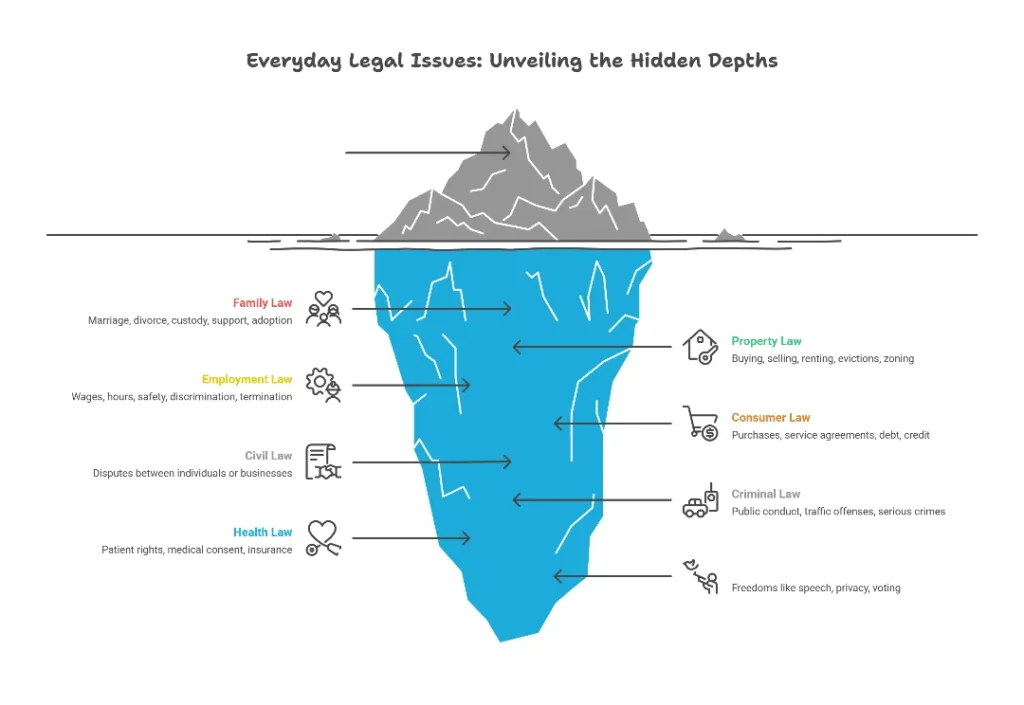
Most legal issues fall into familiar categories, even when people do not initially label them as such. I have noticed, while conducting research, that understanding the different types of law helps you identify risks early and make more informed choices, which is the core of Legal Advice Basics.
Family law covers marriage, divorce, custody, support, adoption, and protection from abuse. These matters affect personal relationships and long-term stability, so timing and documentation matter.
Property and real estate law governs buying and selling homes, renting, evictions, zoning, and boundary disputes. Housing problems often grow from unclear leases or missed notices.
Employment and labor law regulates wages, hours, workplace safety, discrimination, and termination. Many disputes turn on written policies, emails, and pay records.
Consumer and contract law applies to everyday purchases, service agreements, debt, credit issues, and defective products. These rules shape most financial decisions people make.
Civil law handles disputes between individuals or businesses, including personal injury, negligence, and compensation claims. It provides paths to resolve conflicts without criminal charges.
Criminal law sets rules for public conduct, from traffic offenses to serious crimes. Even minor charges can affect records, jobs, and future rights.
Health law addresses patient rights, medical consent, insurance coverage, and access to care. It often overlaps with family and employment issues.
Civil rights and constitutional law protect freedoms like speech, privacy, voting, and equal treatment. These principles influence every other area of law.
Knowing where a problem fits helps you respond faster, ask better questions, and avoid mistakes that are hard to undo later.
How to Get Reliable Legal Advice or Find the Right Lawyer
People who understand legal advice basics know that finding reliable legal advice starts with slowing down and choosing the source carefully. Quick answers are easy to find, but they are not always trustworthy.
Check License & Authorization:
The first step is confirming that a lawyer is licensed and authorized to practice. Every state bar keeps public records showing license status and discipline history. That single check removes a large amount of risk.
Using Bar Association Referrals
Bar association referral services remain one of the most dependable options. They help narrow the search by practice area and location. National organizations such as the American Bar Association support ethical standards and referral programs used across the country.
Verify Credentials and Experience
From reviewing common legal disputes, many problems begin when people rely on referrals or online claims without checking credentials or experience. Online consultations may clarify options early, but urgent or complex matters often require direct representation.
Legal Advice Costs, Fees, and Affordable Help Options
“I can’t afford a lawyer.”
Most people think this before they even check what legal help actually costs. The fear of unknown fees keeps people from getting guidance—even when a single consultation could prevent thousands in mistakes or lost rights.
Legal advice often feels expensive because the pricing isn’t explained clearly upfront. But here’s what many don’t realize: not all legal help requires full-price representation, and understanding how lawyers charge gives you control before pressure sets in.
According to the 2024 Clio Legal Trends Report, cost concerns remain the main reason people avoid legal advice, even when delay increases overall risk. This section breaks down exactly what legal help costs, how billing works, and where free or reduced-cost options exist when you need them most.
What Legal Help Actually Costs
Legal fees vary based on the type of service, case complexity, and your location. Here’s what you need to know:
Common Fee Types Explained:
Fee Type | Typical Cost (U.S.) | Best For & Key Benefit |
|---|---|---|
Hourly Rate | $200–$500 per hour | Complex disputes; pay only for time used |
Flat Fee | $300–$1,500+ | Predictable tasks; clear pricing upfront |
Contingency Fee | 25%–40% of recovery | Injury claims; no fee unless you win |
Reduced / Sliding Scale | Varies by income | Civil matters; cost based on ability to pay |
Pro Bono / Legal Aid | Free | Low-income cases; no-cost legal help |
Hourly Rates: What You’re Actually Paying For
Most lawyers charge hourly for reviewing documents, giving advice, and handling legal matters. In the United States, rates often range from $300 to $400, depending on experience, location, and case complexity. A one-hour consultation usually covers contract review, explanation of your position, and clear guidance on next steps.
Flat Fees: Predictable Costs for Routine Work
Some legal services use flat fees for predictable tasks like simple wills, uncontested divorces, or basic contracts. Fees often range from $300 to $1,500 and are agreed upon up front. This structure works best when the scope is clear and avoids unexpected billing later.
Contingency Fees: No Win, No Fee
Contingency fees apply only to cases tied to financial recovery, such as personal injury claims or certain employment disputes. The lawyer is paid only if the case succeeds, usually taking 25 to 40 percent of the recovery. If you don’t win, you don’t pay attorney fees.
What Actually Drives Legal Costs
Fees are shaped by more than the lawyer’s rate. Case complexity, deadlines, court filings, and opposing parties all matter. Preparation often costs more than people expect, and a solid grasp of Legal Advice Basics helps clients bring clear facts, organized records, and realistic questions to the first conversation, which keeps work focused and expenses under control.
Free and Affordable Legal Help: You Have More Options Than You Think
Access to legal help should never depend on wealth alone. Over the years, I have seen free and low-cost legal services stop evictions, protect families, and resolve disputes before they became crises.
Legal Aid Organizations
Legal aid offices provide free help for civil matters, including housing, family law, benefits, and consumer disputes. Most focus on low-income households and urgent issues. Programs funded by Legal Services Corporation operate nationwide and rely on licensed attorneys, not volunteers without authority.
Pro Bono Attorney Programs
Pro bono services connect eligible individuals with lawyers who volunteer their time. Many state bar associations support these programs. Online tools like ABA Free Legal Answers allow users to ask civil questions and receive written responses from licensed attorneys.
Law School Clinics
Law school clinics offer free guidance under faculty supervision. These clinics often handle landlord disputes, immigration concerns, and simple family matters. Students work directly with clients, but supervising attorneys review all advice and filings.
Local Resource Directories
Websites like LawHelp.org guide users to local programs, court forms, and eligibility rules based on location and issue type. These directories are updated regularly and help people find assistance that matches their situation.
Legal Advice Basics helps people navigate difficult moments, especially when cost limits access to full representation. Even brief guidance at the right time can prevent larger problems and support safer, more informed decisions.
Talking About Fees Early
Fee discussions should happen at the very beginning, before any work starts, so there is no confusion later about cost, scope, or responsibility. Ask clear questions about how billing works, what services are included, and what situations could increase fees, because assumptions often lead to frustration.
Red Flags: When Pricing Doesn’t Add Up
Legal Terms Explained in Easy English
Legal terms shape how rights, deadlines, and outcomes are decided, yet many people never learn them until a problem appears. I have experienced in my research career that confusion over basic words causes more mistakes than complex laws ever do. Understanding these terms supports clearer thinking and smarter choices, which is the real goal behind Legal Advice Basics.
Basic Legal Tips Everyone Should Follow
Here are a few practical habits that help people avoid legal trouble before it grows. From reviewing legal issues, these are the basics that protect rights early, reduce risk, and reflect a clear understanding of Legal Advice Basics before decisions become costly.

Verify Your Lawyer’s Credentials
Legal guidance must come from a licensed attorney. Before sharing facts or documents, confirm the lawyer’s license and practice focus. This single step prevents misinformation and costly missteps.
Protect Attorney–Client Confidentiality
Attorney–client privilege protects private conversations with a lawyer, not casual discussions elsewhere. Avoid sharing details with friends, online groups, or public platforms where information can resurface later.
Get Agreements in Writing
Verbal promises fade. Written terms last. Even simple arrangements benefit from clear language that outlines duties, timelines, and expectations, which helps resolve disputes if memories differ.
Read Documents Before Signing
Never rely on summaries or assurances. Take time to understand terms, deadlines, and consequences. If something feels rushed or unclear, pause and seek clarification first.
Keep Legal Records Organized
Contracts, notices, emails, and receipts often matter more than recollection. Well-kept records help lawyers assess issues quickly and protect your position when facts are questioned.
Seek Legal Help Early
I observed multiple times that delays shrink options and increase risk. As a basic legal expert, I recommend seeking early legal advice from your lawyer.

Online And Social Media Legal Advice Explained
Social media forums and online comments often share personal experiences, not legal guidance. Anyone can post, and the information may be outdated, incorrect, or based on laws from a different state. I have seen people rely on online advice and lose rights simply because it did not apply to their situation, a common gap in legal advice basics.
Online legal platforms are different when they connect you with licensed attorneys. Virtual consultations can help explain options or next steps, but they still require full facts and clear limits. Social media has no oversight, which is why complex or urgent issues usually need direct legal representation.
Common Legal Advice Mistakes
Seeking legal advice can protect your rights, but common mistakes often weaken good positions before a case even starts. I have seen many issues grow worse, not because the law was unclear, but because early choices were avoidable.

Relying on Unqualified Sources
Many people turn to friends, forums, or random websites for guidance. Those sources may sound confident, but they lack accountability and training. Licensed lawyers can apply the law to real facts. In practice, I often see damage caused by advice that never should have been followed.
Waiting Too Long to Get Help
Delay is one of the most costly mistakes. Deadlines matter in almost every legal issue. Once time passes, options shrink, and early legal advice often costs less while providing far stronger protection.
Not Understanding Fees and Scope
Some clients move forward without clear discussions about fees or services. That creates confusion and frustration later. Ask how billing works and what the lawyer will handle. Clear expectations prevent future disputes.
Sharing Incomplete or Inaccurate Information
Legal advice depends on facts. Leaving out details, even unintentionally, leads to weak guidance. Honesty matters more than presentation. In researching procedural errors, incomplete information causes more harm than bad facts.
Ignoring Privacy and Conflicts
Sharing sensitive details publicly can damage a case. Always confirm confidentiality and check for conflicts of interest before moving forward. Avoiding these mistakes reflects a sound understanding of Legal Advice Basics, because good legal outcomes often depend on early, careful decisions rather than last-minute fixes.
Civil vs. Criminal Legal Advice
Civil and criminal legal advice serve very different purposes, and confusing them can be costly. Civil matters involve disputes over money, property, contracts, family issues, or benefits. Criminal matters involve accusations by the government that can lead to fines, probation, or jail. In the United States, civil cases make up over 90 percent of court filings, while criminal cases carry the highest personal risk.
The stakes and rights also change. In a civil case, you usually control whether to file or settle. In a criminal case, the state controls prosecution, and your freedom may be at risk. For example, missing a deadline in a contract dispute may cost money, but missing a court date in a criminal charge can lead to arrest. That is why criminal matters require immediate legal counsel, while civil issues still benefit from early guidance under Legal Advice Basics.
DIY Legal Help vs. Hiring a Lawyer
Most people face this choice at least once. As a researcher, I have seen simple issues handled well on one’s own and serious problems made worse by guessing. You can face these situations at any time, which is why everyone should learn the basics of legal advice.
When DIY Legal Steps Can Make Sense
Handling a matter yourself can work when the risk is low and the facts are clear. Simple tasks often fit this category.
Pros of DIY legal steps
Cons of DIY legal steps
When Hiring an Attorney Is the Safer Choice
Some situations carry lasting consequences. In my legal research, these are the cases where early legal help prevents damage that cannot be undone later.
Pros of hiring an attorney
Cons of hiring an attorney
Criminal charges, custody disputes, immigration matters, large assets, business issues, or contested estates almost always require professional help. Fixing a DIY mistake often costs more than doing it right the first time.
Independent Legal Advice (ILA) Explained
Independent Legal Advice, often called ILA, means getting guidance from a lawyer who represents only you, not the other party. It ensures you understand what you are signing, the risks involved, and the rights you may give up. In reviewing real-world legal outcomes, I have seen many disputes avoided simply because someone understood the Legal Advice Basics before committing to a serious agreement.
What Independent Legal Advice Really Means
ILA is not a quick signature check or a formality. A lawyer reviews the document with you, explains legal and financial effects, and confirms you are signing freely and with full understanding. This protects you from pressure, confusion, or unfair terms.
When Independent Legal Advice Is Required
ILA is often required for personal guarantees, mortgage refinancing, separation agreements, joint property deals, and contracts with major financial impact. Lenders and courts rely on ILA to prevent future claims of misunderstanding or coercion.
How the ILA Process Works
The process usually includes identity checks, a private meeting, document review, and clear explanations in plain language. The lawyer asks questions to confirm understanding and ensures no one is forcing your decision. This step creates a clear record of informed consent.
Key Benefits of Getting ILA
Independent Legal Advice reduces the risk of costly disputes and strengthens the agreement if challenged later. It helps you spot unfair clauses, hidden liabilities, or long-term consequences before they become serious problems. This clarity often saves far more than it costs.
ILA vs. Full Legal Representation
ILA focuses on one document or decision and does not involve ongoing negotiation. Full legal representation covers strategy, negotiation, and advocacy across the entire matter. Knowing the difference helps you choose the right level of support.
Why ILA Matters in High-Risk Situations
High-value or high-pressure agreements carry lasting consequences. ILA ensures your decision is informed, voluntary, and legally sound, building the same foundation that strong, well-understood legal guidance principles are meant to provide.
Basic Legal Advice During Litigation
Litigation moves in phases, and each stage brings different risks and choices. Research into dispute resolution shows that clear planning early often shapes the outcome. Strong Legal Advice Basics help you act with purpose instead of reacting under pressure.
Pre-Litigation Planning and Case Review
Before a case reaches court, careful review matters. This stage includes checking contracts, preserving records, and weighing strengths and risks. Early steps often open the door to settlement and can prevent costly court action.
Managing the Case During Active Litigation
Once a case is filed, timing and focus become critical. Courts expect deadlines to be met, documents to be accurate, and arguments to be clear. In practice, clients who stay organized and communicate well avoid many avoidable setbacks.
Steps After Trial and Appeal Options
A case does not always end with a verdict. You may need to enforce a judgment, negotiate final terms, or review appeal deadlines. From researching legal procedures, it becomes clear that missing one deadline can undo months of hard work.
Lessons from Real-World Litigation Outcomes
Past cases show how small details change results. Strong evidence, clear records, and early decisions often lead to resolution, while weak preparation leads to delays. Litigation rewards steady judgment, not rushed moves.
Building Confidence Through Legal Advice Basics
Confidence in legal matters grows from understanding, not guesswork. When people learn how laws work and where limits exist, decisions feel steadier and less rushed. From researching legal disputes, I have seen calm replace anxiety once clients understand their position and the next realistic step.
That confidence also comes from knowing when to pause and seek help instead of forcing answers alone. Strong Legal Advice Basics teaches people how to ask better questions, recognize risk early, and rely on accurate information rather than pressure or noise. Clear knowledge reduces stress, sharpens judgment, and leads to smarter legal choices.

Final Thoughts
Legal problems rarely begin in a courtroom. They usually start with confusion, missed details, or decisions made without enough information. That is why learning the basics matters long before a dispute grows.
Throughout this guide, you saw how law touches daily life, from documents and deadlines to costs, rights, and available support. You learned when self-help makes sense, when free resources apply, and when independent legal guidance becomes necessary.
One consistent finding from my research is that early understanding often protects more than late action. People who know what questions to ask, what risks to watch for, and where to turn make calmer and safer decisions under pressure.
Legal Advice Basics is not about replacing a lawyer. It is about helping you recognize risk early, avoid common mistakes, and approach legal situations with clarity instead of fear. Even limited guidance, used at the right time, can prevent lasting consequences.
About the Author
Mehboob Qamber is a legal researcher and legal writer specializing in U.S. legal topics, including legal rights, legal procedures, and access to legal help. With over six years of experience researching legal systems, they focus on making legal information clear and accessible for everyday readers. This content is for educational purposes only and does not constitute legal advice.
Disclaimer
This information is meant to help you understand legal topics in a general way. It is not legal advice and does not create a lawyer-client relationship. For advice specific to your situation, always consult a licensed attorney or a trusted legal aid service in your area.