
Plaintiff vs Defendant: Roles & Differences Explained 2026
Filing a lawsuit or being sued? The legal advice basics start here: plaintiff vs defendant roles determine who proves what, who speaks first, and who faces financial risk.
The plaintiff files the case and must prove their claims. The defendant responds and challenges that evidence. Understanding these responsibilities helps you navigate the legal process confidently from start to finish.
Plaintiff vs Defendant Key Differences
| Legal Aspect | Plaintiff | Defendant |
| Case initiation | Files the lawsuit | Responds to the lawsuit |
| Legal position | Claims harm occurred | Contests or denies claims |
| Burden of proof | Must prove the case | Challenges evidence |
| Court actions | Presents the case first | Cross-examines and rebuts |
| Financial exposure | Filing costs and fees | Defense costs and judgments |
| Settlement posture | Seeks compensation | Limits liability |
| Risk if loses | Case dismissed, wasted costs | Pays judgment or damages |
The plaintiff brings the case. The defendant answers it. Everything that follows stems from these starting positions.
Understanding Plaintiff and Defendant in Court
Courts use these terms to organize legal proceedings. Judges rely on them to manage schedules and procedures. Lawyers use them to plan a strategy.
Anyone can become a plaintiff or defendant. Accident victims, business owners, employees, and property owners all fall into one category or the other when disputes arise.
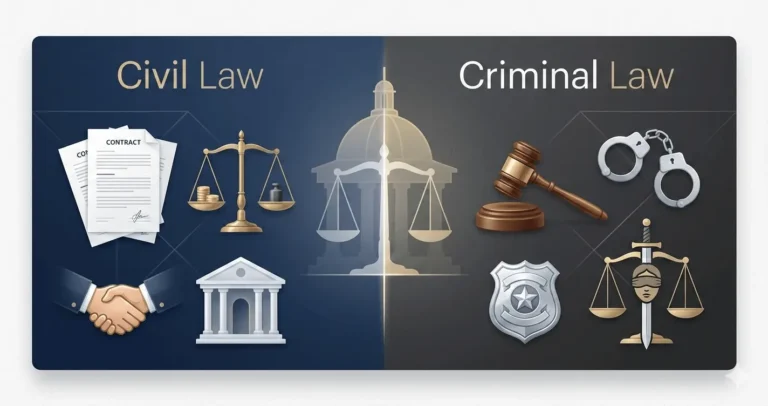
Civil cases usually involve money or specific remedies. Criminal cases focus on punishment and public safety. The roles remain consistent across both systems.
What Is a Plaintiff?
Legal Definition of a Plaintiff
A plaintiff is the party who starts a lawsuit. This person or entity claims another party caused legal harm and seeks a remedy through court action.
The word comes from Old French, meaning “one who complains.” Modern plaintiffs do more than complain. They must build a case, present evidence, and convince a judge or jury.
When Someone Becomes a Plaintiff
You become a plaintiff when you file a complaint with a court. The complaint must identify the defendant, describe what happened, explain which laws were violated, and state what remedy you want.
Filing triggers formal court procedures. The court assigns a case number. The defendant receives notice. Deadlines begin running.
Plaintiff’s Responsibilities in a Lawsuit
Plaintiffs must follow strict court rules. Missing a deadline can destroy an otherwise strong case. Key responsibilities include meeting discovery deadlines, disclosing evidence to the other side, attending depositions and hearings, and responding to motions. Plaintiffs also decide whether to settle or proceed to trial.
Burden of Proof: What Plaintiffs Must Prove
In civil cases, plaintiffs prove their case by a preponderance of the evidence. This means showing something is more likely true than not. Think of it as tipping the scales just past 50 percent.
Criminal cases require a higher standard: beyond a reasonable doubt. Only prosecutors, not private plaintiffs, file criminal charges in most jurisdictions.
Types of Plaintiffs
Individual plaintiffs are regular people seeking compensation or enforcement of rights. A driver injured in a crash becomes an individual plaintiff.
Corporate plaintiffs include businesses enforcing contracts, collecting debts, or protecting intellectual property. A software company suing over copyright infringement acts as a corporate plaintiff.
Class action plaintiffs represent groups with similar claims. One lead plaintiff files on behalf of hundreds or thousands who suffered the same harm. Product defect and data breach cases often proceed as class actions.
Government plaintiffs enforce laws and regulations. The EPA suing a polluter or a state attorney general prosecuting fraud cases both act as government plaintiffs.
Real Examples of Plaintiffs in Court
A construction worker who fell from faulty scaffolding becomes a plaintiff seeking damages for medical bills and lost wages.
A landlord suing a tenant for unpaid rent and property damage acts as a plaintiff enforcing a lease agreement.
A consumer who received a defective product joins a class action as a plaintiff seeking refunds and compensation.
What Is a Defendant?
Legal Definition of a Defendant
A defendant is the party accused or sued in court. The word stems from “defend,” which describes exactly what defendants must do. Defendants don’t initiate court action. They respond to claims others bring against them.
When Someone Becomes a Defendant
You become a defendant when someone serves you with legal papers. Service of process is the formal delivery of a complaint and summons.
The summons explains that you’ve been sued and gives a deadline to respond, usually 20 to 30 days. Ignoring this deadline can result in a default judgment against you.
Defendant’s Legal Rights and Protections
Defendants have the right to notice of all claims and hearings. They can hire lawyers or represent themselves. They can demand proof of every allegation.
In criminal cases, defendants receive constitutional protections, including the right to remain silent, the right to an attorney, and the right to a jury trial.
How Defendants Respond to Lawsuits
Defendants file an answer admitting or denying each claim. Denials force the plaintiff to prove those allegations.
Some defendants file motions to dismiss, arguing the complaint fails to state a valid legal claim. Others move to strike certain allegations or transfer the case to a different court.
Defense Strategies and Options
Defendants can dispute facts, challenge legal theories, or assert affirmative defenses. An affirmative defense admits the basic facts but provides a legal reason why the defendant shouldn’t be liable.
Common affirmative defenses include statute of limitations, contributory negligence, assumption of risk, and contract defenses like duress or fraud.
Many cases settle before trial. Defendants weigh settlement costs against the risk and expense of going to trial.
Types of Defendants
Individual defendants are private persons accused of wrongdoing. A driver who rear-ended another car becomes an individual defendant.
Corporate defendants include businesses facing lawsuits. A restaurant sued for food poisoning or a manufacturer sued for a defective product both act as corporate defendants.
Multiple defendants occur when several parties share potential liability. A construction accident might name the general contractor, subcontractor, and equipment manufacturer as co-defendants.
Government defendants include cities, counties, and federal agencies sued for actions or omissions. A slip and fall on a broken sidewalk might name the city as the defendant.
Real Examples of Defendants in Court
A doctor accused of medical malpractice becomes a defendant in a lawsuit seeking damages for improper treatment.
A company sued for breach of contract acts as a defendant when a vendor claims non-payment for delivered goods.
A property owner becomes a defendant when someone is injured on their premises and files a premises liability claim.
Plaintiff vs Defendant: 7 Critical Differences
1. Who Initiates the Legal Action
Plaintiffs choose when and where to sue. They select the court, draft the complaint, and set litigation in motion.
Defendants react. They had no control over whether the case was filed or which court would hear it.
2. Burden of Proof Requirements
Plaintiffs must prove every element of their claim. In civil cases, this means showing each fact is more likely true than not.
Defendants only need to create a reasonable doubt. They don’t have to prove innocence or lack of fault. Raising questions about the plaintiff’s evidence can be enough.
3. Legal Objectives and Goals
Plaintiffs seek remedies like money damages, injunctions stopping certain behavior, or orders requiring specific performance of contracts.
Defendants want dismissal, reduced liability, or favorable settlement terms. Their goal is to minimize loss, not to gain something new.
4. Financial Responsibilities and Risks
Plaintiffs often pay upfront costs, including filing fees, service fees, and expert witness expenses. Many work with attorneys on contingency, paying nothing unless they win.
Defendants pay hourly attorney fees that accumulate throughout the case. If they lose, they also pay the judgment or settlement amount.
5. Courtroom Duties and Procedures
Plaintiffs present their case first. They call witnesses, introduce evidence, and build their argument before defendants respond.
Defendants cross-examine the plaintiff’s witnesses and then present their own evidence. This order gives plaintiffs the advantage of setting the narrative.
6. Settlement vs Trial Considerations
Plaintiffs weigh certain settlement money against the possibility of a larger jury verdict. They consider legal costs, delay, and the strength of their evidence.
Defendants compare settlement costs to potential judgments plus legal fees. The certainty of a settlement can be worth paying more than they think they owe.
7. Who Pays Legal Fees and Costs
Most American courts follow the “American Rule,” where each side pays its own attorneys regardless of who wins.
Exceptions exist. Contracts sometimes require the losing party to pay the winner’s fees. Some statutes, like civil rights laws, allow prevailing plaintiffs to recover attorney fees.
Plaintiff and Defendant in Civil Cases
How Civil Lawsuits Begin
Civil cases start when a plaintiff files a complaint. This document identifies all parties, describes what happened, explains which laws apply, and states what relief the plaintiff wants.
The court clerk assigns a case number and filing date. The plaintiff then serves the defendant with copies of the complaint and summons.
Preponderance of Evidence Standard
Civil juries and judges decide which side presented more convincing evidence. Absolute certainty isn’t required.
If the scales tip even slightly in the plaintiff’s favor, the plaintiff wins. This is a much lower standard than the “beyond a reasonable doubt” required in criminal cases.
Types of Civil Cases
Personal injury cases involve claims for bodily harm from accidents, medical errors, or defective products. Plaintiffs seek compensation for medical bills, lost wages, and pain.
Contract disputes arise when one party claims another breached an agreement. Businesses frequently sue over unpaid invoices, failed deliveries, or broken promises.
Property disputes include boundary conflicts, landlord-tenant disagreements, and damage claims. Neighbors might sue over encroaching trees or disputed fence lines.
Employment cases involve wage claims, discrimination allegations, or wrongful termination. Workers sue employers, and sometimes employers sue former employees.
Damages and Remedies in Civil Court
Compensatory damages reimburse actual losses like medical expenses, property repairs, and lost income.
Punitive damages punish especially bad conduct and deter similar behavior. Courts award these only in cases involving fraud, malice, or gross negligence.
Injunctions order defendants to do something or stop doing something. A business might seek an injunction preventing a former employee from violating a non-compete agreement.
Settlement Negotiations Explained
Most civil cases settle before trial. Settlement lets both sides avoid the uncertainty, expense, and time of trial.
Negotiations can start immediately or after months of discovery. Mediators often help parties find common ground.
Settlement agreements typically include confidentiality clauses and mutual releases. The plaintiff gets money. The defendant gets finality.
Going to Trial: What to Expect
Trials start with jury selection if either side requested a jury. Lawyers question potential jurors to identify bias.
Opening statements preview each side’s case. The plaintiff presents evidence first, calling witnesses and introducing documents. The defendant cross-examines these witnesses.
After the plaintiff rests, the defendant presents its case. The plaintiff can then present rebuttal evidence. Closing arguments summarize the evidence and ask the jury to decide in each side’s favor.
Role of Insurance Companies
Insurance companies often control defense strategy and settlement decisions for defendants they insure. Policy limits the cap on what insurers will pay.
Plaintiffs sometimes sue insurers directly in bad faith claims when insurers wrongfully deny coverage or refuse reasonable settlements.
Conflicts arise when settlement demands exceed policy limits. Defendants face personal exposure for amounts above what insurance covers.
Plaintiff and Defendant in Criminal Cases
How Criminal Cases Differ
Criminal cases involve alleged violations of laws protecting public safety. Punishment, not compensation, is the goal.
The government prosecutes. Private individuals cannot file criminal charges, though crime victims can report offenses to police and prosecutors.
The Prosecution as Plaintiff
Prosecutors represent the state or federal government. They decide which charges to file and whether to offer plea bargains.
Crime victims are witnesses, not parties. They don’t control whether cases proceed or get dismissed.
Rights of Criminal Defendants
The Constitution guarantees criminal defendants the right to remain silent. Anything they say can be used against them.
Defendants have the right to an attorney. If they cannot afford one, the court appoints counsel. They can confront witnesses and demand that the government prove guilt beyond a reasonable doubt.
Beyond a Reasonable Doubt Standard
This is the highest burden in American law. Prosecutors must eliminate reasonable doubt, not all possible doubt. Juries must be firmly convinced of guilt. If reasonable uncertainty remains, they must acquit.
Possible Outcomes: Acquittal vs Conviction
An acquittal means the defendant is found not guilty. This ends the case. The government cannot retry the defendant for the same crime.
Conviction means guilt was proven. Sentencing follows. Penalties range from fines and probation to prison.
Can You Be Plaintiff AND Defendant?
Yes, in separate proceedings. A criminal case can be followed by a civil lawsuit.
If someone assaults you, prosecutors file criminal charges. You can separately sue the attacker for medical bills and damages. Different standards of proof apply.
The criminal case might end in a conviction and prison. Your civil case might result in a money judgment even if you can never collect it.
The Legal Process: Step-by-Step Journey
Step 1: Filing the Initial Complaint
The plaintiff’s lawyer drafts a complaint stating facts, legal claims, and requested relief. The complaint gets filed with the court clerk along with filing fees.
The court assigns a case number and judge. The case enters the court’s docket.
Step 2: Service of Process
The complaint and summons must be personally delivered to the defendant. Professional process servers or sheriff’s deputies usually handle this.
Proof of service gets filed with the court. Without proper service, the court has no power over the defendant.
Step 3: Defendant’s Response (Answer)
Defendants typically have 20 to 30 days to file an answer. The answer admits or denies each allegation in the complaint.
Some defendants file motions to dismiss instead, arguing the complaint fails to state a legal claim even if all facts are true.
Step 4: Discovery Phase
Discovery is the exchange of evidence. Both sides request documents, send written questions called interrogatories, and take depositions where witnesses testify under oath.
This phase can last months or years. It’s often the most expensive part of litigation.
Step 5: Pre-Trial Motions
Parties file motions for summary judgment, arguing no factual disputes remain and they’re entitled to win as a matter of law.
Courts also hear motions to exclude evidence, compel discovery responses, or sanction parties for violations.
Step 6: Settlement Negotiations
Parties can settle anytime before the verdict. Many courts require mediation or settlement conferences.
Both sides weigh the costs and risks of the trial. Settlement provides certainty. Trial brings uncertainty.
Step 7: Trial and Verdict
If the settlement fails, the case goes to trial. Trials can last days or weeks, depending on complexity.
Juries deliberate and return verdicts. In bench trials, judges decide without juries.
Step 8: Post-Trial Options (Appeals)
Losing parties can appeal, arguing the court made legal errors. Appeals focus on whether the judge applied the law correctly, not whether the jury believed the right witnesses.
Most trial verdicts are affirmed. Successful appeals result in new trials or modified judgments.
Complex Plaintiff-Defendant Scenarios
Multiple Plaintiffs in One Case
Class actions allow one or a few lead plaintiffs to represent hundreds or thousands with similar claims. Courts must certify that common issues predominate over individual differences.
Joint plaintiffs pursue related but separate claims. Family members often join as co-plaintiffs in wrongful death cases.
Multiple Defendants in One Case
Joint and several liability means each defendant can be held responsible for the entire judgment. Plaintiffs can collect from whichever defendant has money.
Defendants can then seek contribution from co-defendants based on each party’s share of fault.
Third-Party Claims and Cross-Claims
Defendants can bring third parties into cases when those parties might share liability. A contractor sued for construction defects might bring in subcontractors or suppliers.
Cross-claims occur when co-defendants sue each other. This often happens in multi-vehicle accidents where each driver blames the others.
Counterclaims: When Defendants Sue Back
Defendants can file counterclaims against plaintiffs. These become separate claims within the same case.
Compulsory counterclaims arise from the same facts and must be filed, or they’re waived. Permissive counterclaims involve different facts and can be filed separately.
Common Misconceptions About Plaintiffs and Defendants
The Plaintiff Is Always Right
Filing a lawsuit proves nothing. Many plaintiffs lose because they cannot prove their claims. Courts dismiss weak cases on motions. Juries reject claims lacking evidence.
Defendants Are Always Guilty or Liable
An allegation is just that: an allegation. Defendants are presumed not liable until proven otherwise. Many defendants win because plaintiffs fail to meet their burden of proof.
The Plaintiff Always Wins Money
Many cases end with no recovery. Dismissals, directed verdicts, and defense verdicts leave plaintiffs with nothing but legal bills. Even winning plaintiffs sometimes cannot collect judgments from defendants who lack assets.
You Cannot Be Both Plaintiff and Defendant
Roles can shift. A defendant who files a counterclaim becomes a plaintiff on that claim. Separate cases can cast the same person in different roles. You might sue someone while being sued by someone else.
Plaintiffs Do Not Pay Anything
Plaintiffs often pay filing fees, service costs, deposition fees, and expert witness charges. These can total thousands of dollars, even with a contingency fee lawyer. If plaintiffs lose, they usually cannot recover these costs.
Real Case Example: Plaintiff vs. Defendant
Car Accident Personal Injury Case
Maria was stopped at a red light when James rear-ended her truck while texting. She suffered neck injuries requiring six months of physical therapy.
As plaintiff, Maria filed suit claiming James was negligent. She presented police reports showing James admitted to texting, medical records documenting her injuries, and wage statements proving lost income.
As the defendant, James, argued that Maria stopped too quickly and that her injuries were pre-existing. His lawyer challenged her medical evidence and claimed she exaggerated pain.
After 14 months, the case settled for 80,000 dollars. Maria received about 50,000 after attorney fees and costs. James’s insurance paid the settlement.
When to Speak With a Lawyer
Contact an attorney immediately if you’ve been served with legal papers. Missing response deadlines can cost you the case.
Seek legal advice and the types of law before filing suit. Lawyers evaluate whether your claim has merit, falls within the statute of limitations, and justifies the costs of litigation.
Consider consultation if you’re injured, your business faces a dispute, you’re accused of wrongdoing, or you need to enforce a contract. Early legal guidance prevents costly mistakes and protects your rights.
Conclusion
The plaintiff-defendant distinction shapes everything that follows in a case. Knowing which role you fill helps you understand your rights, responsibilities, and strategic options.
Plaintiffs carry the burden but control the narrative. Defendants respond but can assert powerful defenses.
If legal action affects your future, seek qualified legal counsel. Whether you need a lawyer or an attorney depends on your jurisdiction, but professional guidance makes the difference between protecting your rights and losing them. Understanding the basics helps, but experienced representation turns knowledge into results.